
The short answer: a layer of oil on top of natural peanut butter is completely normal. When a jar contains only ground roasted peanuts, the peanuts’ own oil slowly rises to the surface. Stir it back in with a clean spoon, keep the lid closed, store the jar somewhere cool and away from sunlight, and use a clean spoon every time.
Many people open their first jar of 100% peanut butter, see a shiny pool of oil and wonder whether something has gone wrong. It has not. This guide explains why separation happens, how to stir a full jar without making a mess, where to store it and how to tell when a jar is no longer at its best.
What “natural” peanut butter actually means
Peanut butter is simply a paste made from ground, dry-roasted peanuts. Many mass-market spreads add other ingredients, such as sugar, salt or a solid fat (for example hydrogenated vegetable oil or palm oil), which help to keep the texture uniform and stop the oil from separating.
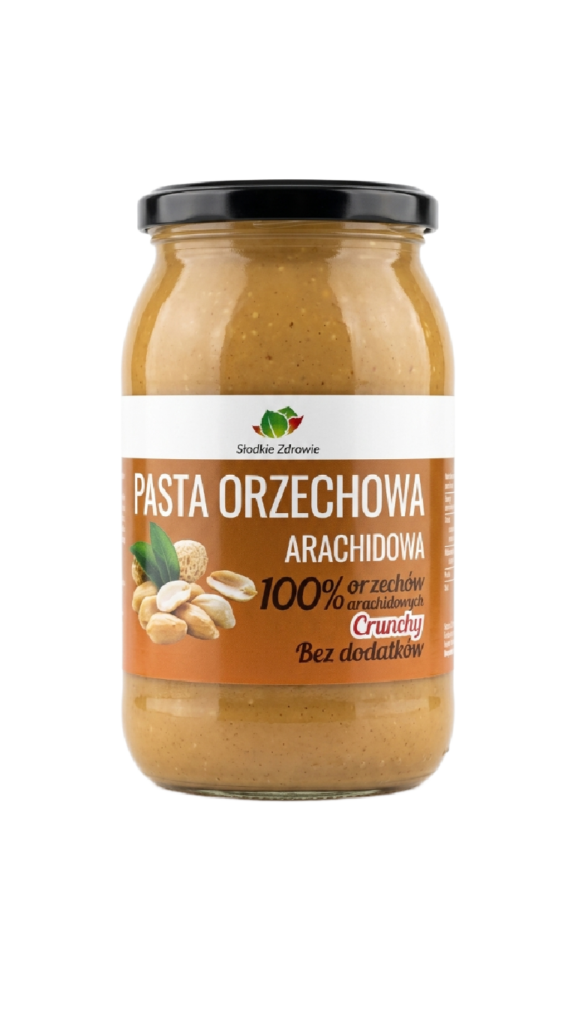
Our Crunchy Peanut Butter 900 g has a one-line ingredient list: 100% roasted peanuts. There is no added sugar, no added salt and no palm oil, and it comes in a glass jar. Because nothing has been added to hold the oil in place, a little separation is exactly what you should expect.
A short botanical note
Despite the name, the peanut (Arachis hypogaea) is not a true nut. It is a legume, a relative of beans and peas, originally from South America. Its pods ripen underground, which is why it is also called the groundnut. Peanut pastes have a long history, and in 1884 Marcellus Gilmore Edson of Montreal received a patent for a peanut paste, one of the early milestones of the spread we know today.
Why the oil separates
Roasted peanuts are rich in fat. According to the label of our jar, 100 g contains 49 g of fat. When the peanuts are ground, part of that fat is released as liquid peanut oil, and the rest stays with the finely ground solids.
Oil is lighter than the ground peanut solids, so over days and weeks gravity does its work: the solids slowly settle and the oil rises to the top. A few things make this happen faster:
- Warmth. Oil becomes more fluid at higher temperatures, so a jar kept next to the oven or on a sunny windowsill separates sooner.
- Time on the shelf. The longer a jar stands untouched, the thicker the oil layer becomes.
- Movement during delivery. A jar that has travelled may arrive with more visible oil than one that has stood still.
The oil layer is part of the product, not a defect. Do not pour it away: without it the peanut butter at the bottom of the jar will become dry and crumbly.
How to stir a full jar without making a mess
The first stir is the hardest, because the jar is full and the solids at the bottom may be quite firm. These steps make it easier:
- Let a cold jar warm up. If the jar has been somewhere cool, leave it at room temperature for a while so the contents soften.
- Use a sturdy tool. A strong butter knife, a thin spatula or a chopstick works better than a teaspoon.
- Start slowly. Push the tool gently to the bottom and work it in small circles, folding the oil down rather than whisking quickly, so the oil does not spill over the rim.
- Scrape the sides and bottom. The firmest part usually sits at the very bottom. Keep folding until the texture looks even all the way through.
- With the crunchy version, expect to feel the peanut pieces as you stir. That is the texture, not undissolved lumps.
Some people make the first stir easier by transferring the whole jar into a bowl, mixing it there and spooning it back. Others store the closed jar upside down for a while before opening, so the oil moves towards the base. Both are simple kitchen tricks; choose whichever suits you.
Where to store natural peanut butter
The storage instruction on our jar is short: store in a cool, dry place, and stir well before use. In practice that means:
In the cupboard
A closed cupboard or pantry away from the cooker, radiators and direct sunlight is the most convenient place. The peanut butter stays soft and easy to spread.
In the fridge
Some people prefer to keep an opened jar in the fridge once it has been stirred. Cold makes the paste firmer and the oil less fluid, so it separates more slowly, but it is also harder to spread straight from the fridge. If you choose the fridge, take the jar out a little before you need it.
Everyday habits that matter
- Always use a clean, dry spoon or knife. Crumbs, jam or water introduced into the jar shorten its life.
- Close the lid tightly after each use. Air and light speed up the natural ageing of fats.
- Keep the jar upright once it has been stirred, so the lid seal stays clean.
- Follow the best-before date printed on the jar.
How to tell when a jar is past its best
Over a long time, the fats in nuts and seeds can oxidise and turn rancid. You will usually notice this with your senses before anything else. A jar that is past its best may have:
- a sharp, bitter, paint-like or “old” smell instead of the warm roasted aroma;
- a sour or soapy taste;
- visible mould or any unusual spots.
If you notice any of these, do not eat it. A simple oil layer, a slightly darker surface where the oil has been sitting, or a firmer texture after the fridge are not signs of spoilage.
Why a glass jar suits peanut butter
Our peanut butter is packed in a recyclable glass jar. Glass does not absorb the smell of the peanuts, it is easy to see how much oil has risen and how well you have stirred, and the empty jar can be washed and reused for storing dry kitchen goods. Nothing more is needed to enjoy it than a cool cupboard and a clean spoon.
Simple ways to use it in the kitchen
Once stirred, crunchy peanut butter is a versatile pantry staple:
- spread on toast, rice cakes or pancakes, with banana or apple slices;
- stirred into warm porridge;
- blended into a smoothie;
- whisked with soy sauce, a little lime juice and warm water into a quick noodle or vegetable sauce;
- baked into homemade cookies or bars.
For a peanut sauce recipe, a West African-style groundnut stew and baking tips, read our guide to cooking with natural peanut butter.
Because our peanut butter contains no added salt, you can season savoury dishes exactly to your taste. A pinch of our unrefined Celtic Sea Salt works well in a peanut sauce (and if you are curious why that salt is naturally moist, read our guide to grey sea salt and how to store it). You can find more pantry products in our Grocery category or browse the whole shop. Delivery within Lithuania is free.
Frequently asked questions
Is oil on top of peanut butter normal?
Yes. In peanut butter made only from roasted peanuts, the peanuts’ own oil naturally rises to the top over time. Stir it back in before use.
Should I pour the oil off?
No. The oil is part of the peanut butter. If you pour it away, the rest of the jar becomes dry and hard to spread.
Do I need to keep natural peanut butter in the fridge?
Our jar’s label says to store it in a cool, dry place. Some people keep an opened jar in the fridge because cold slows down separation, but it also makes the peanut butter firmer to spread.
Why is the peanut butter at the bottom of the jar hard?
The ground peanut solids settle at the bottom while the oil rises. Stirring thoroughly from the bottom up, ideally with a sturdy knife or spatula, brings the texture back together.
How can I tell if peanut butter has gone off?
A sharp, bitter or paint-like smell, a sour taste or any visible mould are signs that the jar should not be eaten. Always check the best-before date on the jar.
Does this peanut butter contain added sugar or salt?
No. The only ingredient is 100% roasted peanuts, with no added sugar, no added salt and no palm oil.
Please note: peanut butter is a food, not a medicine. This article is general culinary and storage information and is not medical or dietary advice. Allergen information: this product consists of peanuts. Do not eat it if you are allergic to peanuts. Follow the storage instructions and best-before date on the jar.
Sources
- Product label of our Crunchy Peanut Butter 900 g: ingredients, nutrition values per 100 g, country of origin and storage instructions.
- Wikipedia, Peanut butter (composition, stabilisers, history)
- Wikipedia, Peanut (Arachis hypogaea, botanical origin)